

Mining operators, ground support engineers, procurement managers, and underground contractors often focus on friction bolts when designing rock reinforcement systems. However, the performance of a Combi Plate for Friction Bolt is equally important because it directly influences load distribution, surface support effectiveness, and long-term ground stability.
Whether you are working in underground mining, tunneling, civil engineering, hard rock mining, or infrastructure excavation projects, selecting the right Combi Plate for Friction Bolt can improve safety, reduce maintenance costs, and enhance support system reliability.
Many ground support failures are not caused by the friction bolt itself but by inadequate surface support.
When rock strata experience movement, stress redistribution, seismic activity, or localized deformation, loads are transferred to the support system. If the plate lacks sufficient strength, stiffness, or bearing capacity, it may deform prematurely and compromise the overall reinforcement structure.
As underground mines become deeper and excavation conditions become more challenging, demand for reliable Combi Plate for Friction Bolt systems continues to increase.
Ground support systems are commonly used in:
Underground mining
Hard rock mining
Coal mining
Tunnel construction
Hydropower projects
Infrastructure excavation
Geotechnical stabilization projects
The effectiveness of these systems depends on the interaction between friction bolts, split sets, mesh, straps, and support plates.
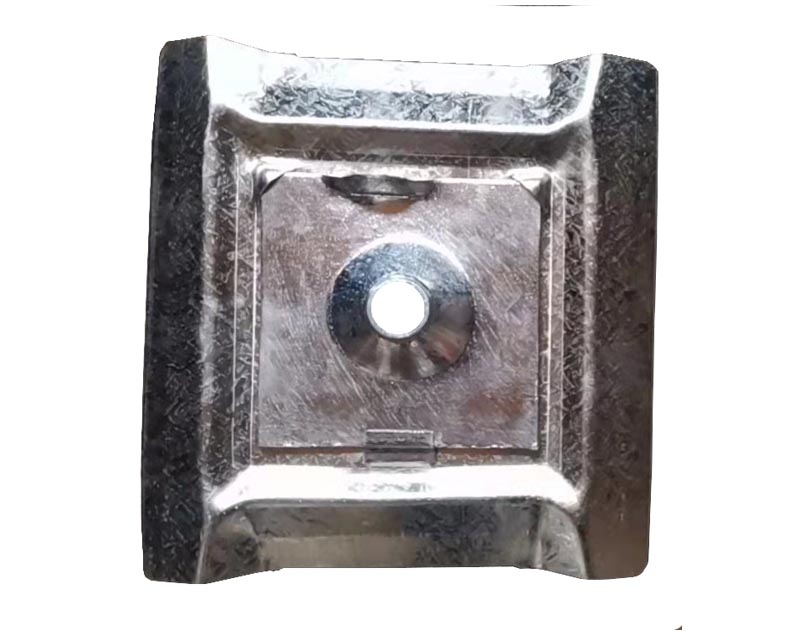
Material selection significantly affects plate performance.
Most Combi Plate for Friction Bolt products are manufactured using high-strength steel to withstand underground loading conditions.
Higher yield strength helps resist deformation under dynamic and static loads.
The design of the plate influences load transfer efficiency.
Factors include:
Plate dimensions
Dome shape
Bearing surface area
Thickness
Central hole design
Proper geometry improves contact with rock surfaces and support mesh.
Mining environments often expose components to moisture, groundwater, and corrosive conditions.
Protective options may include:
Hot-dip galvanization
Zinc coating
Corrosion-resistant steel grades
Longer service life reduces replacement frequency and maintenance costs.
Precision forming and consistent quality control help ensure reliable performance in underground applications.
Dimensional accuracy is critical for compatibility with friction bolts and split set systems.
Different mining environments require different plate configurations.
Suitable for:
General underground mining
Stable ground conditions
Routine rock support applications
Advantages include:
Cost effectiveness
Easy installation
Broad compatibility
Recommended for:
Deep mining operations
High-stress ground conditions
Seismic zones
Large excavation projects
Benefits include:
Higher load capacity
Improved durability
Enhanced support performance
Ideal for:
Wet mines
Coastal tunnels
High-humidity environments
These solutions help maximize service life.
The lowest-cost plate may not provide adequate load-bearing capacity.
A support system failure can create significantly higher costs than initial savings.
Ground conditions should always influence plate selection.
Different rock masses require different support strategies.
Corrosion can weaken support components and shorten operational lifespan.
Compatibility between friction bolts and plates is essential for system performance.
Before ordering a Combi Plate for Friction Bolt, buyers should verify:
Confirm steel specifications and mechanical properties.
Evaluate width, length, thickness, and bearing area.
Ensure compatibility with selected friction bolts or split sets.
Review testing data and project requirements.
Determine whether galvanized or corrosion-resistant coatings are required.
Verify applicable mining and ground support specifications.
Consider humidity, groundwater exposure, rock type, and excavation depth.
For mining companies and contractors seeking reliable underground support solutions, Tanrimine provides high-performance Combi Plate for Friction Bolt systems designed for demanding ground support applications.
Applications include:
Split Set Support Systems
Friction Bolt Installations
Rock Reinforcement Projects
Underground Mining Operations
Tunnel Ground Support
Geotechnical Stabilization
The product range is engineered to deliver reliable load distribution, strong bearing capacity, and long-term durability under challenging underground conditions.
Whether you require standard configurations or customized dimensions, Tanrimine can provide solutions tailored to specific mining and tunneling requirements.
A combi plate is a support component used with friction bolts and split sets to improve load distribution and enhance rock reinforcement performance.
A stronger plate can better withstand ground movement and transfer loads effectively to the support system.
Most products are manufactured from high-strength steel with optional corrosion-resistant coatings.
Yes. Many mining projects require customized dimensions, thicknesses, and hole configurations.
For wet or corrosive environments, galvanized options are often recommended to extend service life.
Looking for a dependable Combi Plate for Friction Bolt solution for your mining or tunneling project?
Whether you need standard products, custom dimensions, bulk supply, or technical support, our team can help identify the most suitable ground support solution.
Contact us today to receive a customized quotation and professional consultation.
Email: jimwang@cnort.com
We welcome inquiries from mining companies, tunneling contractors, distributors, engineering firms, and global procurement teams.
Dome Plate Selection Guide for Friction Bolts
Why Are Friction Bolts Important?