

As underground mining operations continue to move deeper and become more complex, maintaining rock stability and ensuring worker safety have become critical priorities. Within modern Underground Mining and Ground Support Systems, Friction Bolts have emerged as one of the most effective and cost-efficient solutions for rock reinforcement and tunnel stabilization.
Whether used in a Hard Rock Mine, Coal Mine, Underground Tunnel, Hydropower Project, or Civil Infrastructure Excavation, properly installed Friction Bolts help improve ground stability, reduce rockfall risks, and support long-term operational safety.
For mining companies, engineering contractors, and ground support suppliers, an important question remains: Why are Friction Bolts widely used in underground ground support systems?
Friction Bolts are mechanical rock reinforcement products designed to stabilize underground excavations by generating frictional resistance against the surrounding rock mass.
Unlike traditional grouted systems, Friction Bolts create immediate ground support upon installation, allowing faster development cycles and improved safety conditions.
Common product entities include:
Split Set Friction Bolt
Friction Stabilizer Bolt
Rock Support Bolt
Ground Support Bolt
Underground Mining Bolt
Mining Rock Bolt System
These products are essential components of modern Ground Support Systems.
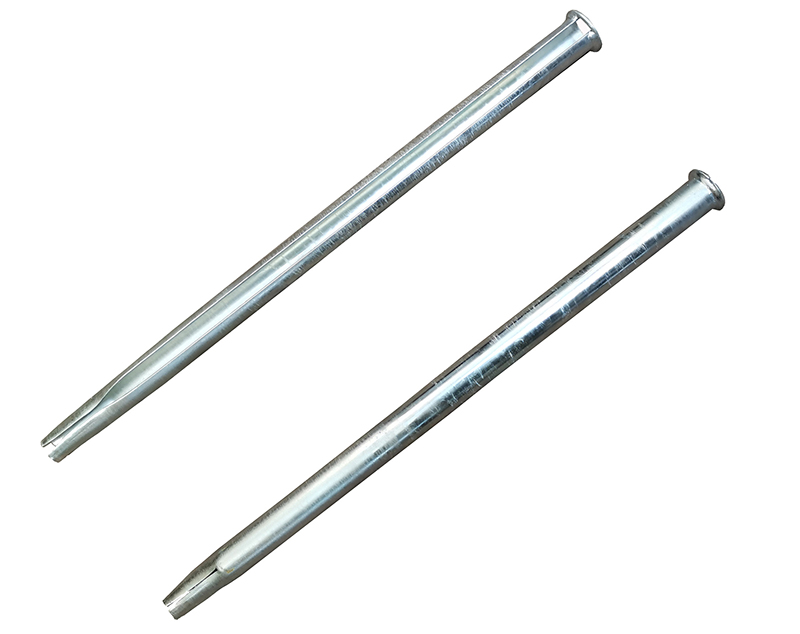
33mm Friction Bolt for Ground Support
Ground instability remains one of the most significant challenges in underground excavation projects.
A high-quality Friction Bolt provides:
Immediate Ground Support
Fast Installation
Improved Worker Safety
Reduced Development Delays
Lower Installation Costs
Reliable Rock Reinforcement
For mining operations where production efficiency directly impacts profitability, these advantages are highly valuable.
A Split Set Friction Bolt is slightly larger than the drilled borehole.
During installation, the bolt is compressed as it enters the hole. This compression generates continuous radial pressure against the rock surface, creating strong frictional resistance.
Advanced Rock Reinforcement Technology enables the bolt to maintain support even when rock movement occurs.
This immediate support mechanism makes Friction Bolts particularly effective in dynamic underground environments.
One of the most important benefits of Friction Bolts is installation speed.
Unlike resin-anchored or cement-grouted systems, a Friction Stabilizer Bolt can be installed quickly using standard mining equipment.
This helps reduce labor requirements and accelerate mine development.
A major advantage of the Mining Rock Bolt System is its ability to provide support immediately after installation.
This feature is particularly valuable in high-production mining operations where delays can be costly.
Underground rock masses are constantly subjected to stress redistribution.
Advanced Ground Control Engineering practices often favor Friction Bolts because they can accommodate minor rock movement while maintaining support effectiveness.
Compared with more complex reinforcement systems, Friction Bolts offer excellent value by combining performance, reliability, and installation efficiency.
The Underground Mining Industry remains the largest user of Friction Bolts.
Applications include:
Gold mines
Copper mines
Zinc mines
Nickel mines
Coal mines
Modern Tunnel Construction Projects require reliable reinforcement systems to maintain excavation safety.
A Ground Support Bolt helps stabilize tunnel walls and roofs throughout construction.
Underground power station caverns frequently utilize Rock Support Bolts to reinforce large excavated chambers.
Transportation tunnels, underground storage facilities, and metro systems increasingly rely on advanced Ground Support Systems.
Understanding the complete supply chain can help buyers make better purchasing decisions.
The upstream supply chain includes:
Steel Manufacturing Industry
Alloy Materials Industry
Metal Forming Industry
Surface Treatment Industry
The quality of raw materials directly impacts the performance and durability of Friction Bolts.
Manufacturers produce:
Split Set Friction Bolt
Friction Stabilizer Bolt
Ground Support Bolt
Mining Rock Bolt System
Advanced production processes often incorporate:
Cold Roll Forming Technology
Precision Tube Manufacturing
Mechanical Expansion Engineering
Corrosion Protection Technology
Key downstream users include:
Underground Mining Industry
Tunnel Construction Industry
Hydropower Engineering Industry
Infrastructure Development Industry
Geotechnical Engineering Industry
These sectors rely heavily on effective rock stabilization solutions.
When purchasing Friction Bolts, buyers should evaluate several critical factors.
High-strength steel provides improved load-bearing capacity and long-term performance.
Precision manufacturing helps ensure consistent installation performance.
In humid underground environments, Corrosion Protection Technology significantly extends service life.
The bolt's ability to withstand rock pressure is critical for maintaining safe excavation conditions.
Products should align with project-specific geotechnical and engineering requirements.
The Ground Support Industry continues to evolve toward:
Higher-strength reinforcement materials
Smart geotechnical monitoring systems
Improved corrosion-resistant products
Faster installation technologies
Sustainable mining practices
Advanced rock mechanics engineering
These developments are increasing demand for reliable Friction Bolts worldwide.
As underground excavations become deeper and more technically demanding, the importance of reliable Ground Support Systems continues to grow. A high-quality Friction Bolt offers immediate support, fast installation, cost-effective reinforcement, and long-term safety benefits.
Whether used in a Hard Rock Mine, Coal Mine, Underground Tunnel, Hydropower Project, or other geotechnical applications, modern Friction Bolts remain one of the most trusted solutions for rock stabilization.
Through advanced Rock Reinforcement Technology, Ground Control Engineering, and Corrosion Protection Technology, today's Split Set Friction Bolt and Mining Rock Bolt System solutions provide the performance required to support safe, efficient, and productive underground operations.